
My friends, in this post, I will discuss and connect many events of the last week: our Commitment Service on Wednesday, Sept. 25th, the Vespers services that some of us designed to help us process our Commitment, and the monthly service of Healing and Wholeness that we celebrated Monday, the last day of September.
I love hearing from you all, and I appreciate you joining me in this year and helping me muse about this beautiful, difficult slice of life.
At the beginning of this third week, peace. – JFL
Division, Wholeness, and Healing
Naaman, commander of the army of the king of Aram, was a great man and in high favor with his master, because by him the Lord had given victory to Aram. The man, though a mighty warrior, suffered from leprosy. Now the Arameans on one of their raids had taken a young girl captive from the land of Israel, and she served Naaman’s wife. She said to her mistress, “If only my lord were with the prophet who is in Samaria! He would cure him of his leprosy.” So Naaman went in and told his lord just what the girl from the land of Israel had said. And the king of Aram said, “Go then, and I will send along a letter to the king of Israel.” […] But when Elisha the man of God heard that the king of Israel had torn his clothes, he sent a message to the king, “Why have you torn your clothes? Let him come to me, that he may learn that there is a prophet in Israel.” So Naaman came with his horses and chariots, and halted at the entrance of Elisha’s house. Elisha sent a messenger to him, saying, “Go, wash in the Jordan seven times, and your flesh shall be restored and you shall be clean.” But Naaman became angry and went away, saying, “I thought that for me he would surely come out, and stand and call on the name of the Lord his God, and would wave his hand over the spot, and cure the leprosy! Are not Abana and Pharpar, the rivers of Damascus, better than all the waters of Israel? Could I not wash in them, and be clean?” He turned and went away in a rage. But his servants approached and said to him, “Father, if the prophet had commanded you to do something difficult, would you not have done it? How much more, when all he said to you was, ‘Wash, and be clean’?” So he went down and immersed himself seven times in the Jordan, according to the word of the man of God; his flesh was restored like the flesh of a young boy, and he was clean. Then he returned to the man of God, he and all his company; he came and stood before him and said, “Now I know that there is no God in all the earth except in Israel…”
2 Kings 5, read at the Service of Healing and Wholeness, Sept. 30, 2019
Before Monday’s service of Healing and Wholeness, I could not decide how to explain or relate the beauty and gravity of last week’s Commitment service. For many of my new Siblings, the service was emotional, if not emotionally exhausting, and many of us happily cried through most of it. I did not. I found it beautiful, moving, a service to follow closely and appreciate — but not overwhelming. However, hanks to the homily that the Rev. Isabelle Hamley, Chaplain to the Archbishop of Canterbury, offered about the healing of Naaman, I think I understand the depth of our Commitment.
For Isabelle, who studies violence against women in the Hebrew Scriptures, the central character in the story of Naaman is the Israelite girl, enslaved by Naaman and his wife, removed from her homeland, but not robbed of her faith. She is truly “the least of these,” but she boldly speaks of the power of the God of her homeland, and of his prophet, Elisha. She speaks from a place of abject humility, but also faith; faith that is not even diminished by her abduction and enslavement. For Isabelle, this girl should be our example for belief that persists through suffering, but also an example for unity within the church. She is suffering, yes, but she is still willing to see another’s suffering and offer the salve and salvation of her God. For Isabelle, division within the church can similarly be healed by humility, by compassion for others, and by faith through adversity.
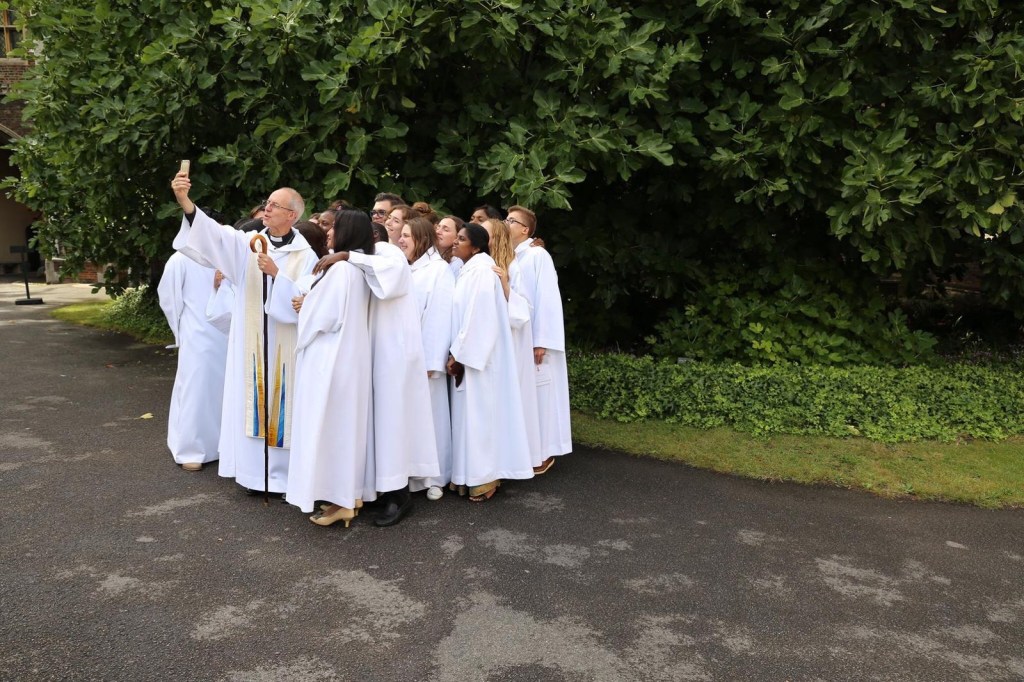
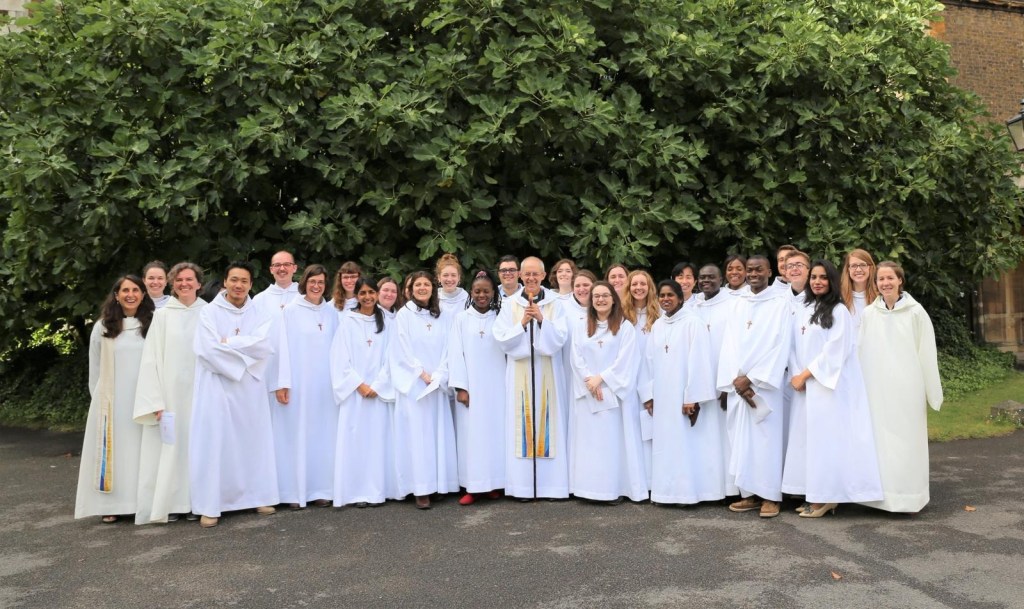
Division and unity are big topics here at the Palace. Each day, at Morning Prayer, we share in saying the Prayer for Unity (below.) When we celebrate the Eucharist at noon, we can watch our Roman Catholic friends receive a blessing rather than the Sacrament. When we are anointed for healing, the brokenness of the Church is just as important as the state of our own bodies and souls. Archbishop Welby and his staff often discuss the pain they feel for the brokenness of the church — but also of their friendship with Catholic and Orthodox leaders and their shared hope for the future of the Church. Recently, he recounted Pope Francis suggesting that the churches just start serving and working together, and leave the theologians to figure out the details. There is a massive fig tree at the Palace, which the last Roman Catholic Archbishop planted in 1556; Archbishop Welby recently carried cuttings to the Vatican, as a reminder that unity can grow and thrive.
Lord Jesus, who prayed that we might all be one,
we pray to you for the unity of Christians,
according to your will,
according to your means.
May your Spirit enable us
to experience the suffering caused by division,
to see our sin
and to hope beyond all hope.
Amen.
The Community of St. Anselm emerged from this dream of Christian unity, and Isabelle challenged us, in particular, to follow the Israelite girl by inviting others to find and follow God, despite the different cultures and conflicts that produced us.
Yet, I wonder if more of us did not come to Lambeth Palace like Naaman, proud, sure of our traditions, sure of the purity of our own rivers…but still somehow willing to entertain the offer of another way. I think, before we can collectively tell others, “the God we know can cure our division,” we have to be willing to go down into the murky waters of the Jordan.
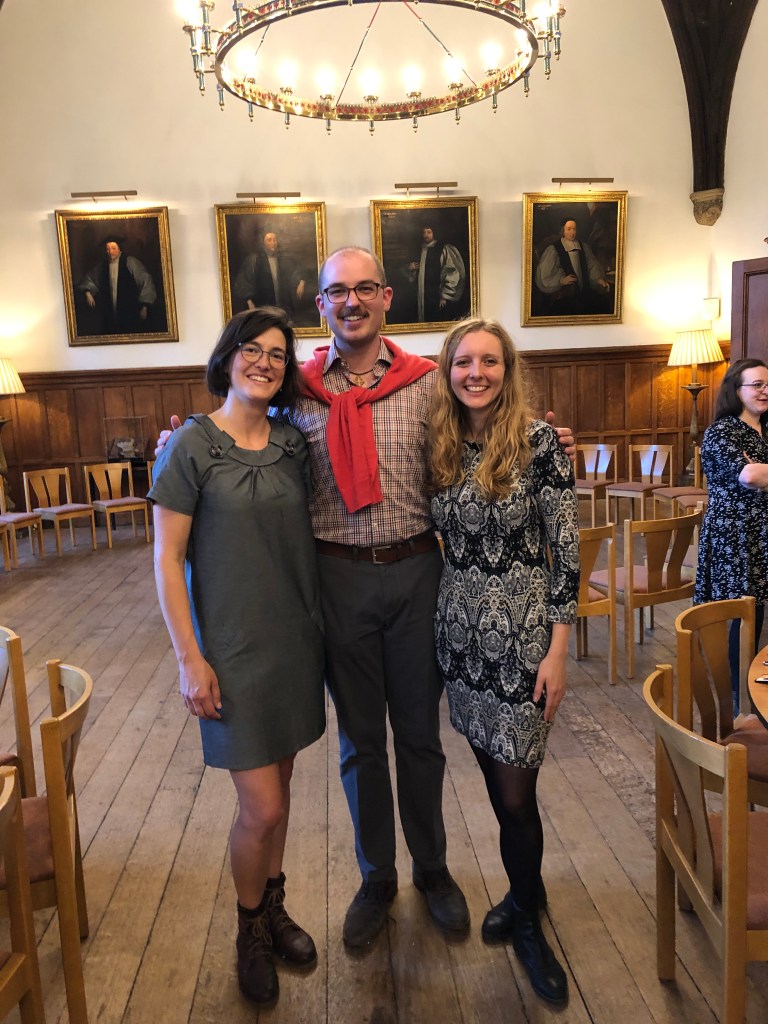
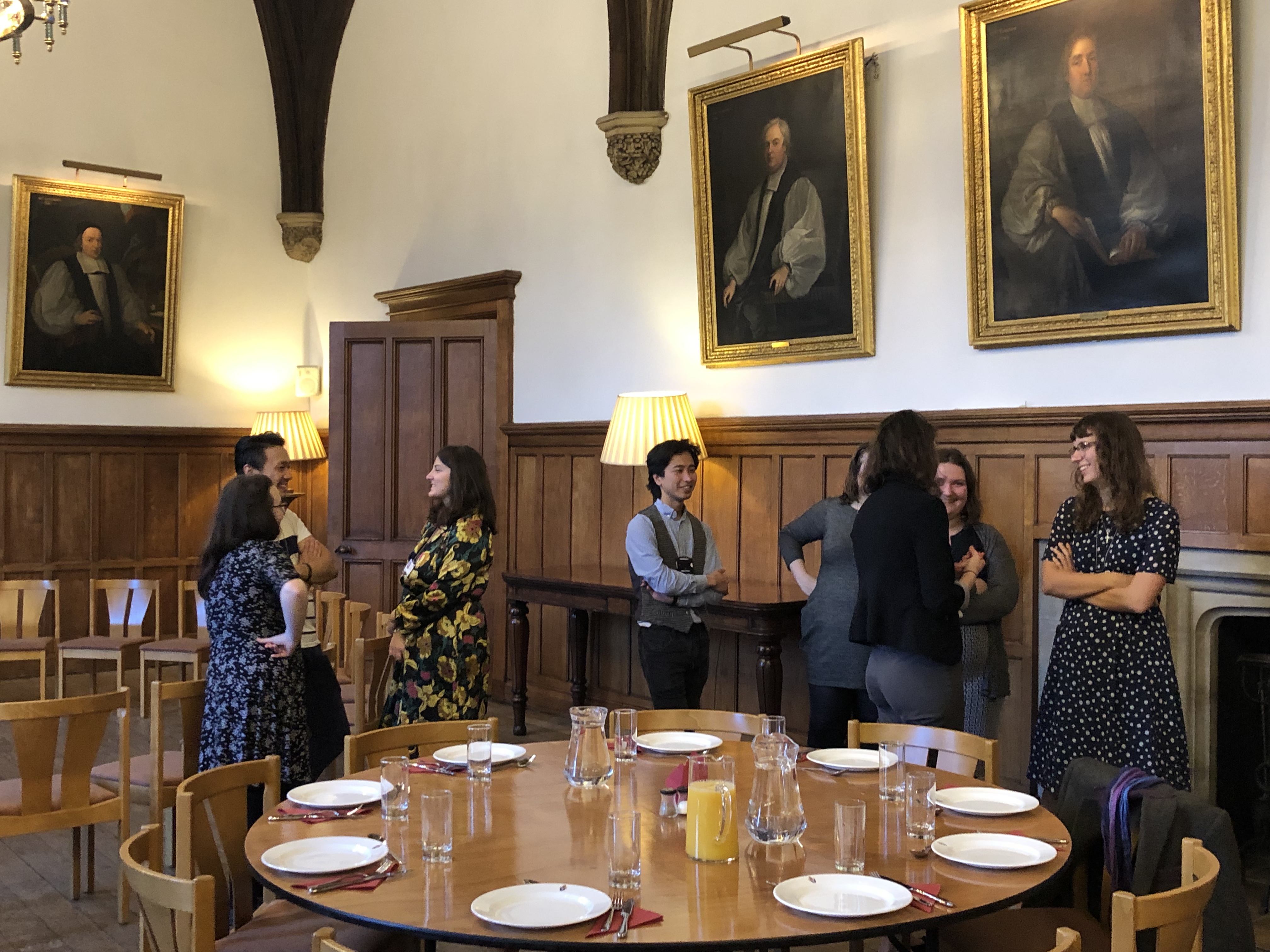
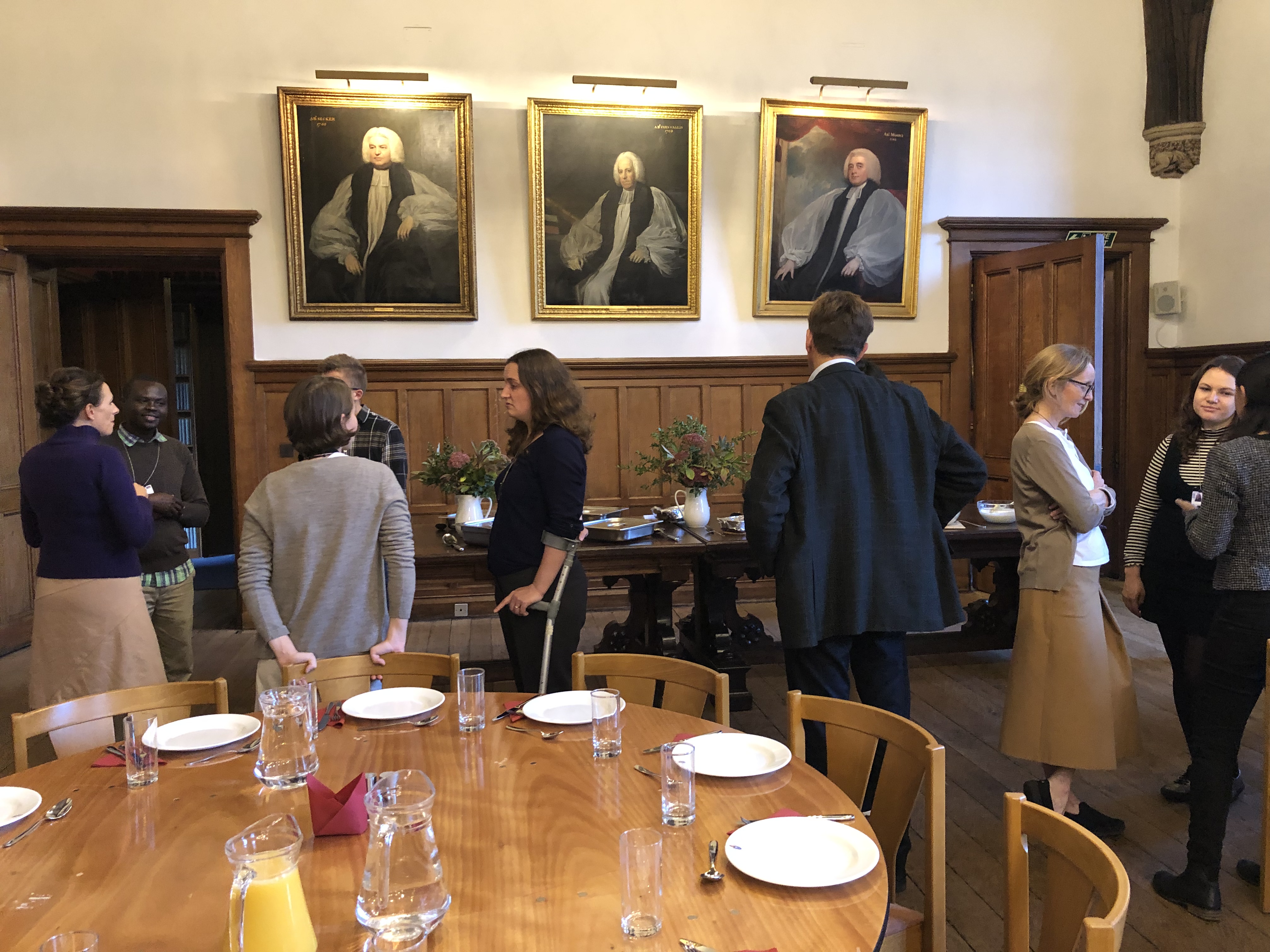
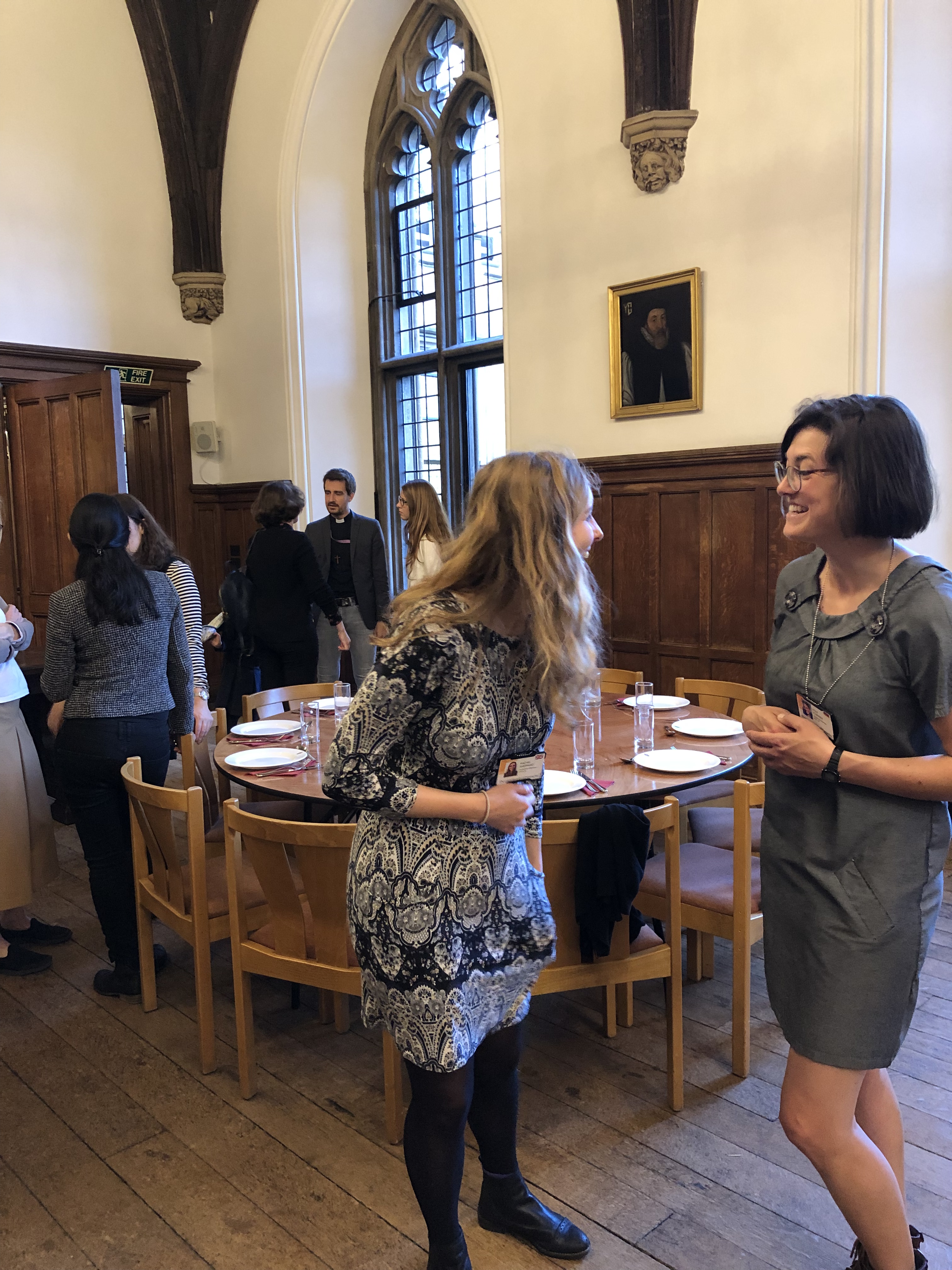
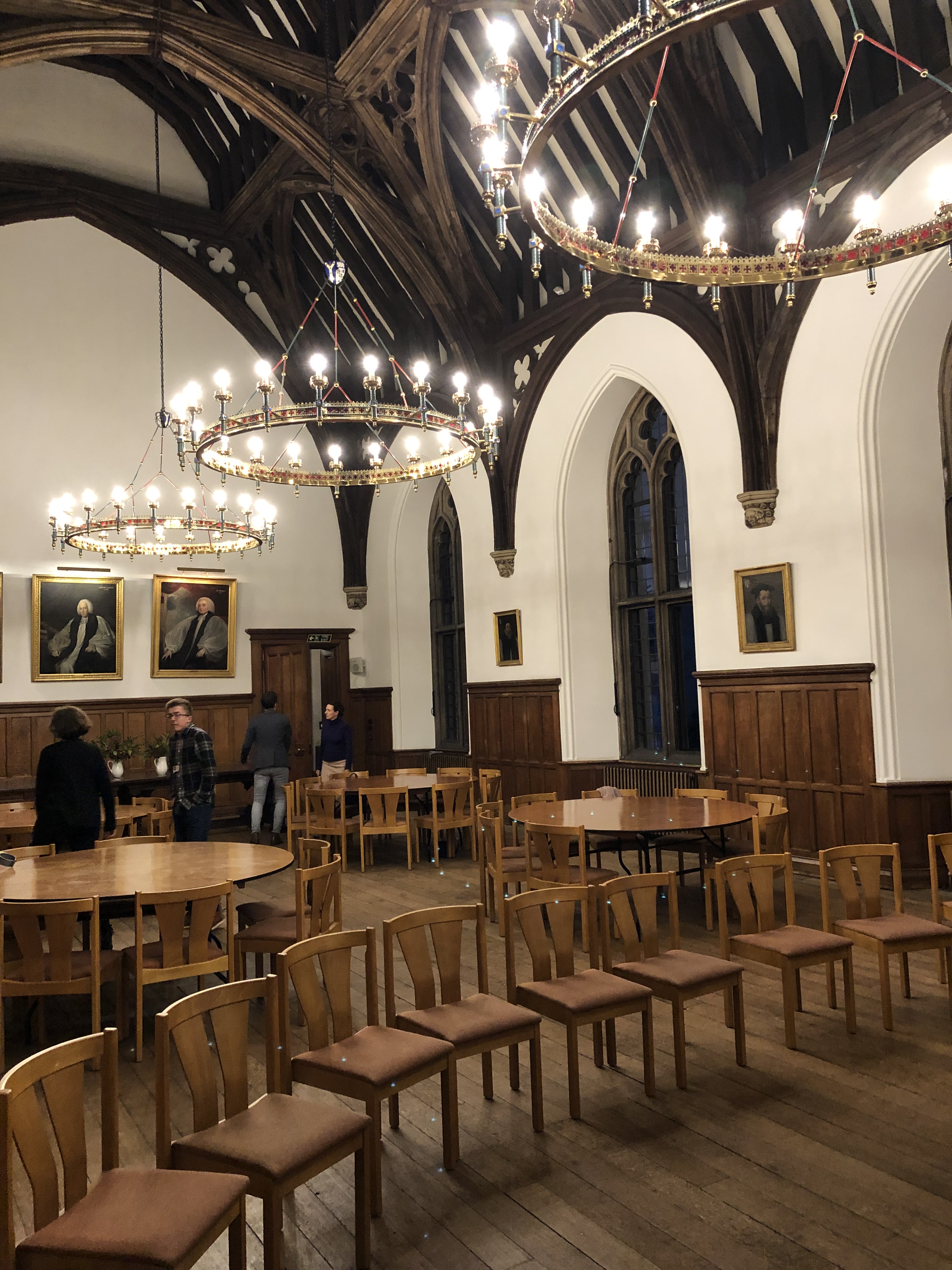
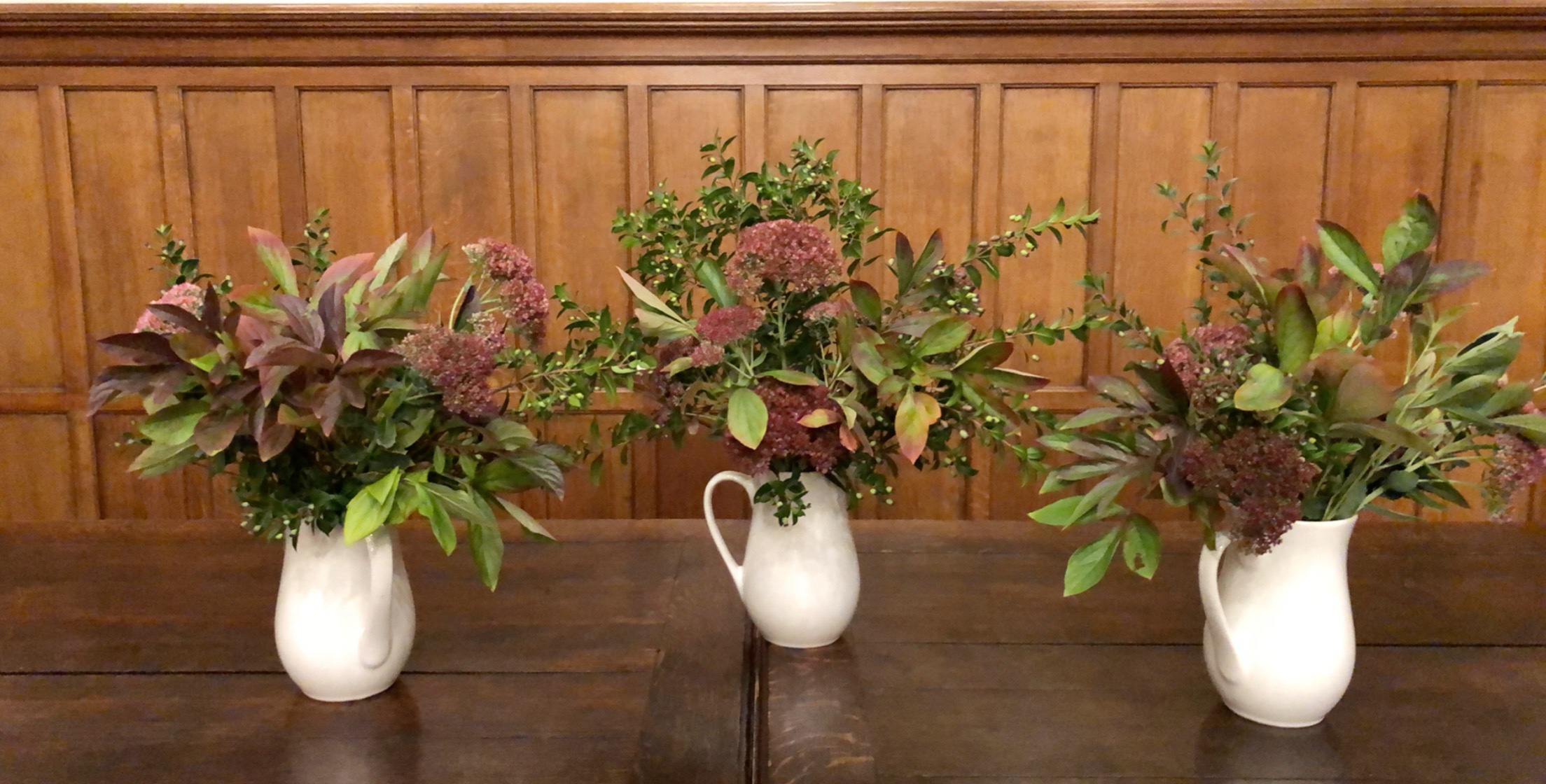
Photos from the first dinner for the Whole Community, Immersive and Integrated
Confirmation + Covenant + Commitment
Naaman washed seven times in the Jordan. John baptized Jesus in the same river, and we have continued to sprinkle, dip, and dunk ever since. Baptism is the rite of passage into the Church, when we are marked as Christ’s own forever, but for many of us, the conscious decision comes later. When I became an Episcopalian, my bishop confirmed me into the church. Each January, many Methodists communally renew their covenant with God. Last week, two dozen millennials from all around the world committed themselves to unity, silence, simplicity, prayer, and community. Together, we made a conscious, mature choice to be set apart for God and for one another.
Our Commitment Service was last Wednesday, September 25, but some of us used our weekly, Community-led Vespers services to help us appreciate and process our choosing. My Canadian brother, David, and I planned a Vespers that featured a number of elements centered on coming together to seek God: the song, “Seek ye first,” which I adapted to discuss choosing a communal life; an illustration, below, from Scott Erickson, which represented being grounded and anchored in community; and Alan Paton’s poetry, which highlighted the depth of meaning behind our upcoming Commitment Service. The following week, my British sister, Rachel, led us through the Methodist Covenant Prayer, and encouraged us to discuss the pledges that we found easy and difficult to make.
Seek ye first the Kingdom of God
In the choice to live
With one another, hand in hand
Allelu Alleluia
Ask and it shall be given unto you
Burdens shared as one
With one another, hand in hand
Allelu Alleluia
Seek ye first the Kingdom of God
In this common life
And all these things shall be added unto you
Allelu Alleluia

I say to my son, these are the visible and outward forms,
From Meditation for a Young Boy Confirmed,
These are the inarticulate gestures, the humble and supplicating hands of the blind reached out,
This is the reaching out of children’s hands for the wild bird,
These are the hands stretched out for water in the dry and barren land.
This is the searching in a forest for treasure, buried long since under a tree with branches,
This is the searching in the snowstorm for a long-awaited letter,
The lost white paper that has blown away.
This is the savage seeking a tune from the harp,
the man raking the ashes for the charm in the burned-out house.
This is the man thrusting his head through the stars,
searching the void for the Incomprehensible and Holy;
Keep for it always your reverence and earnestness, these are men searching here,
They stretch out their hands for no star, for no knowledge, however weighty,
They reach out humbly, supplicating, not more than a cubit’s length
That haply they may touch the hem of the robe of the Infinite and everlasting God.
Alan Paton, South African Author and Anti-Apartheid Activist, 1903-1988
Featured at St. Margaret’s, Westminster on Sept. 15, 2019
I am no longer my own, but yours.
Methodist Covenant Prayer
Put me to what you will, rank me with whom you will;
put me to doing, put me to suffering;
let me be employed for you, or laid aside for you,
exalted for you, or brought low for you;
let me be full,
let me be empty,
let me have all things,
let me have nothing:
I freely and wholeheartedly yield all things
to your pleasure and disposal.
And now, glorious and blessed God,
Father, Son and Holy Spirit,
you are mine and I am yours. So be it.
And the covenant now made on earth, let it be ratified in heaven.
Amen.
I found Paton’s poem especially relevant for my personal relationship with God and the Community, now, at the beginning of our year together. I read it on my first Sunday in London, featured rather passively in the bulletin of a local parish. I shaped a Vespers service around its images of stars, treasures, wild birds, and burnt-out houses, because I needed to process why it spoke to me so, and to try to communicate my feelings with my Siblings. I think many of us are reaching and searching, making “inarticulate gestures,” and I might even think that many of us find something infinite, but this year, I have chosen to do my reaching in this place, with this people, in God’s time.
On Wednesday, our day began with Morning Prayer, as usual, but for once we did not have to roll out tables, set up chairs, or multiple ingredients to make vast amounts of food for our guests. Instead, we got to take our time getting ready (pure luxury!) welcome our Integrated members, and then wait for our families and friends to arrive.
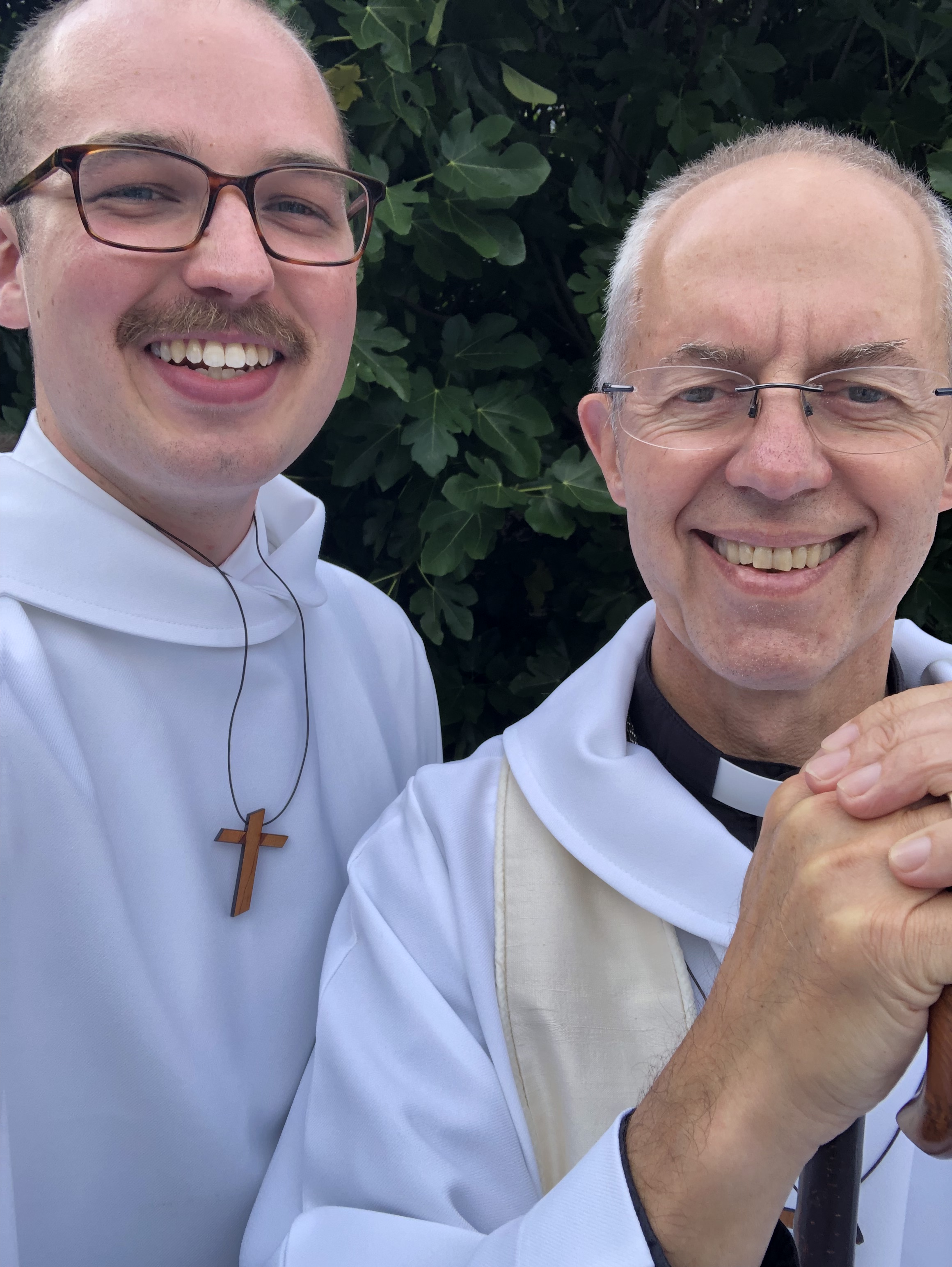
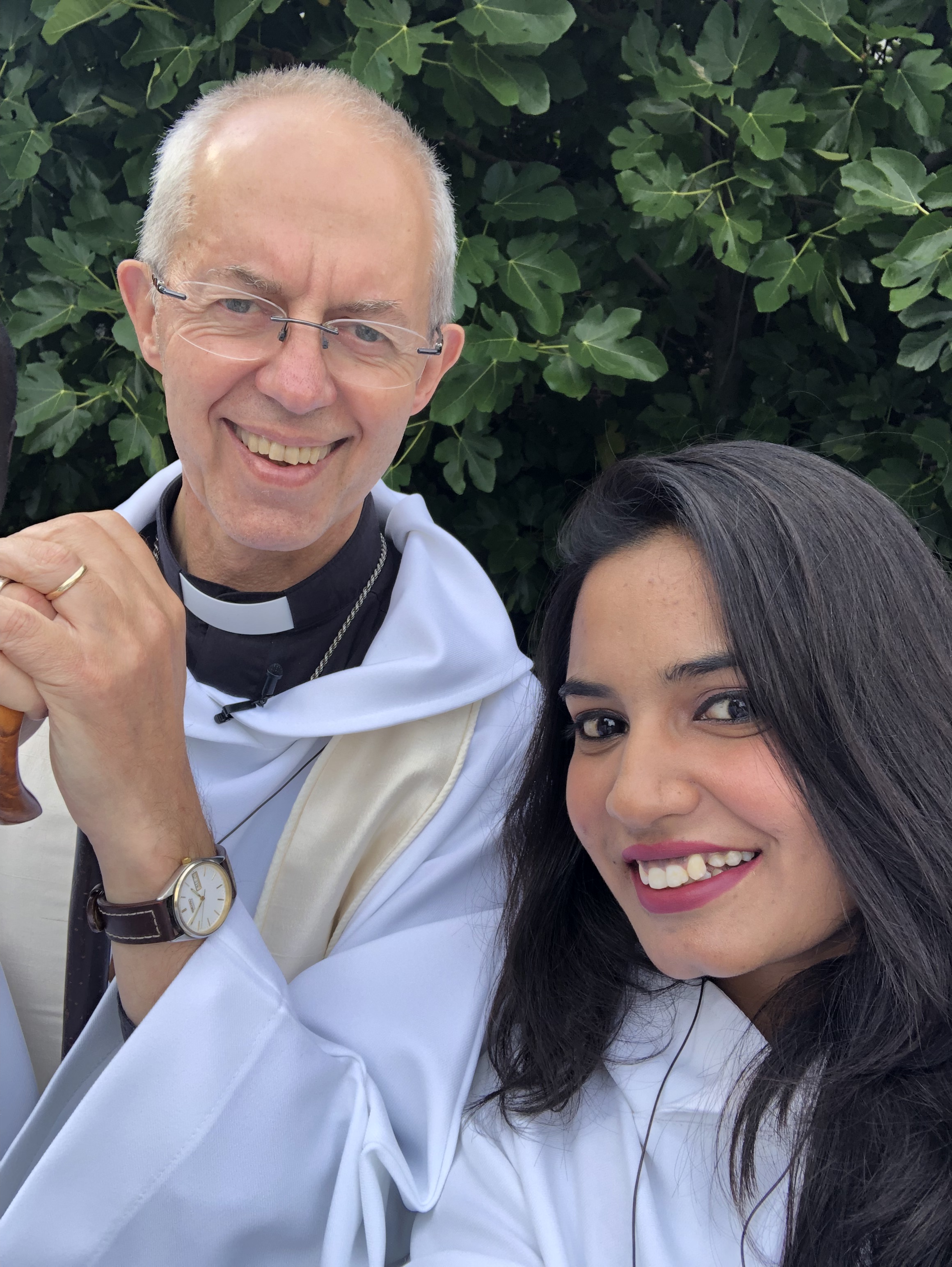
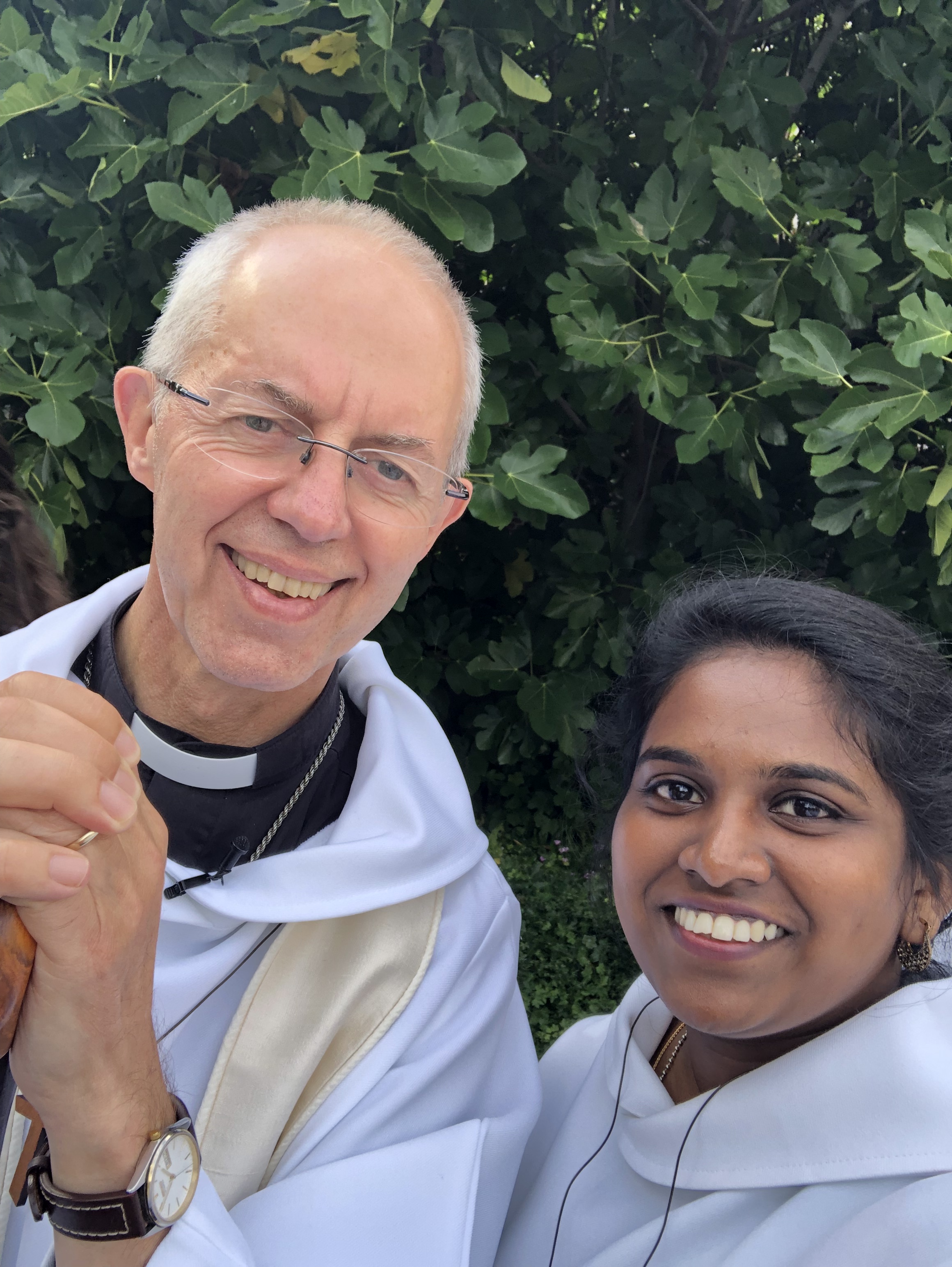
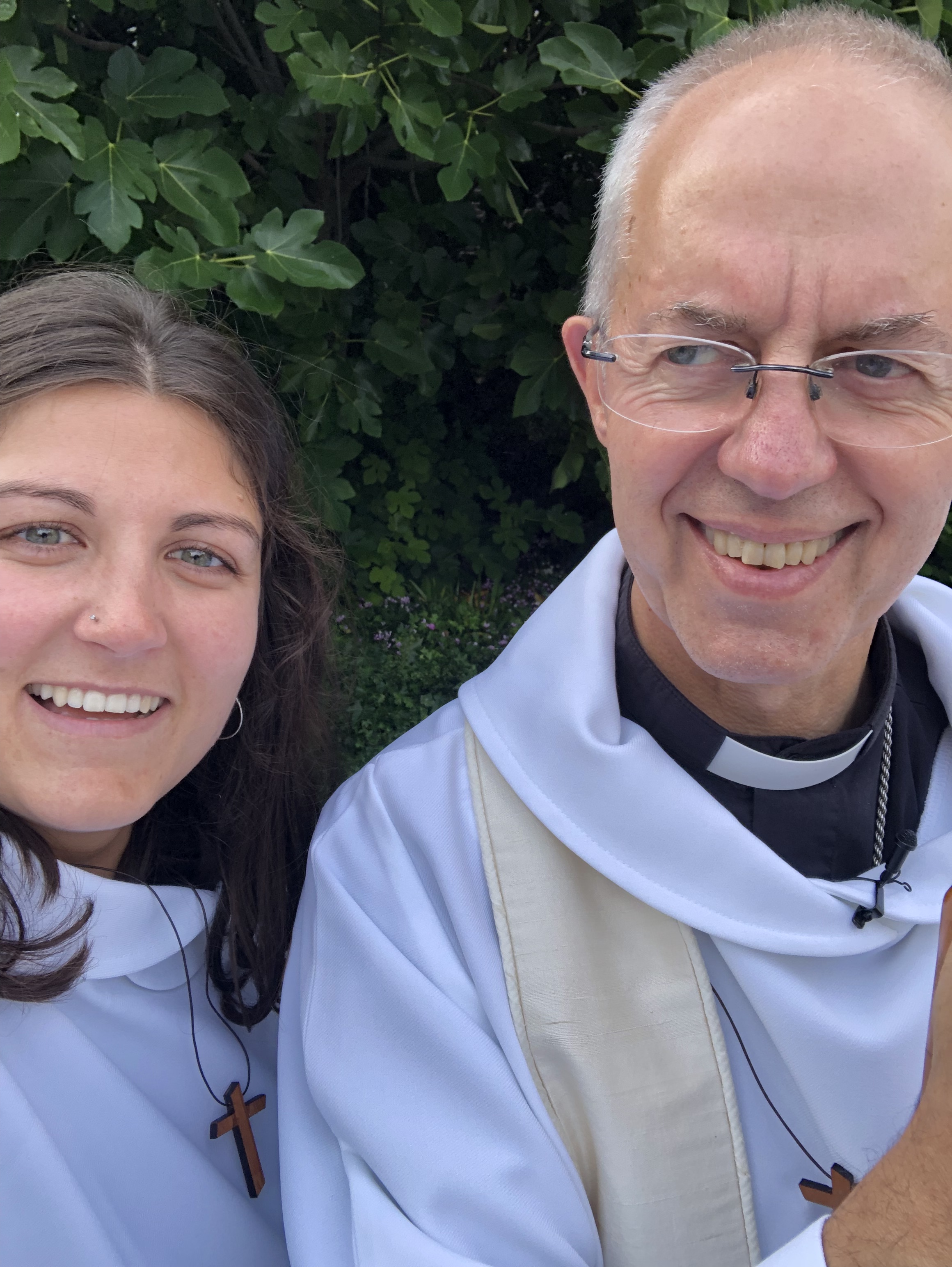
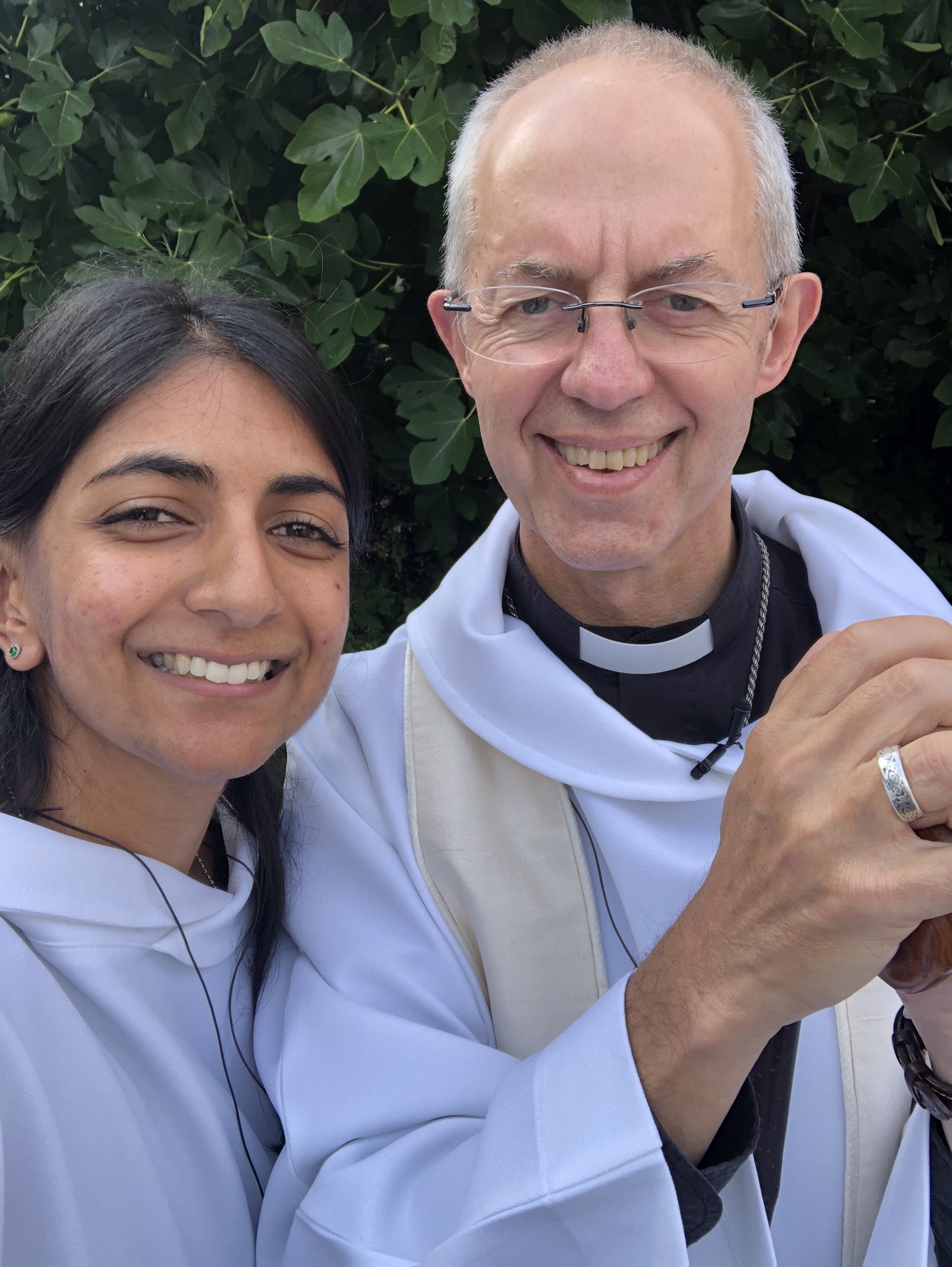
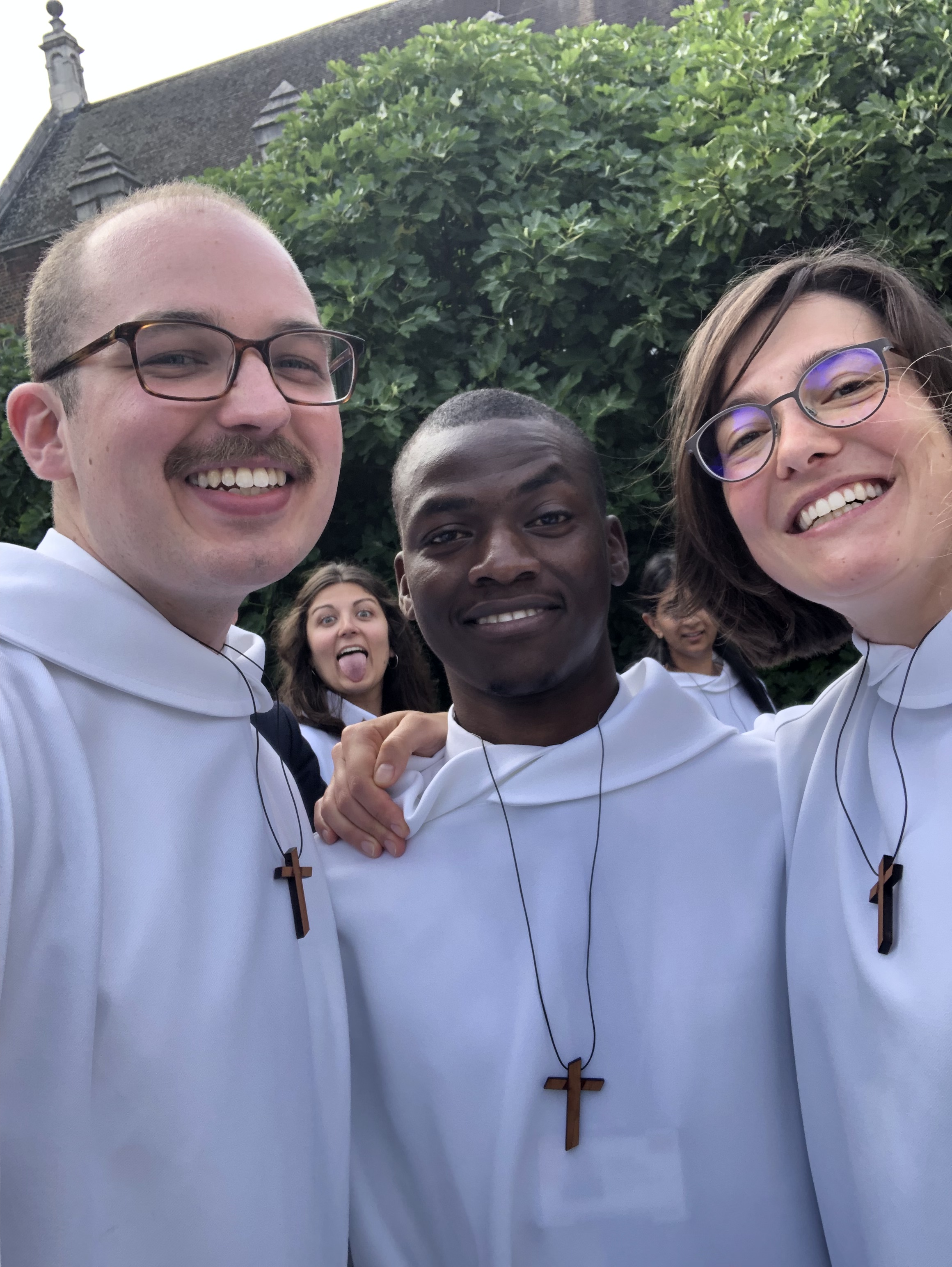
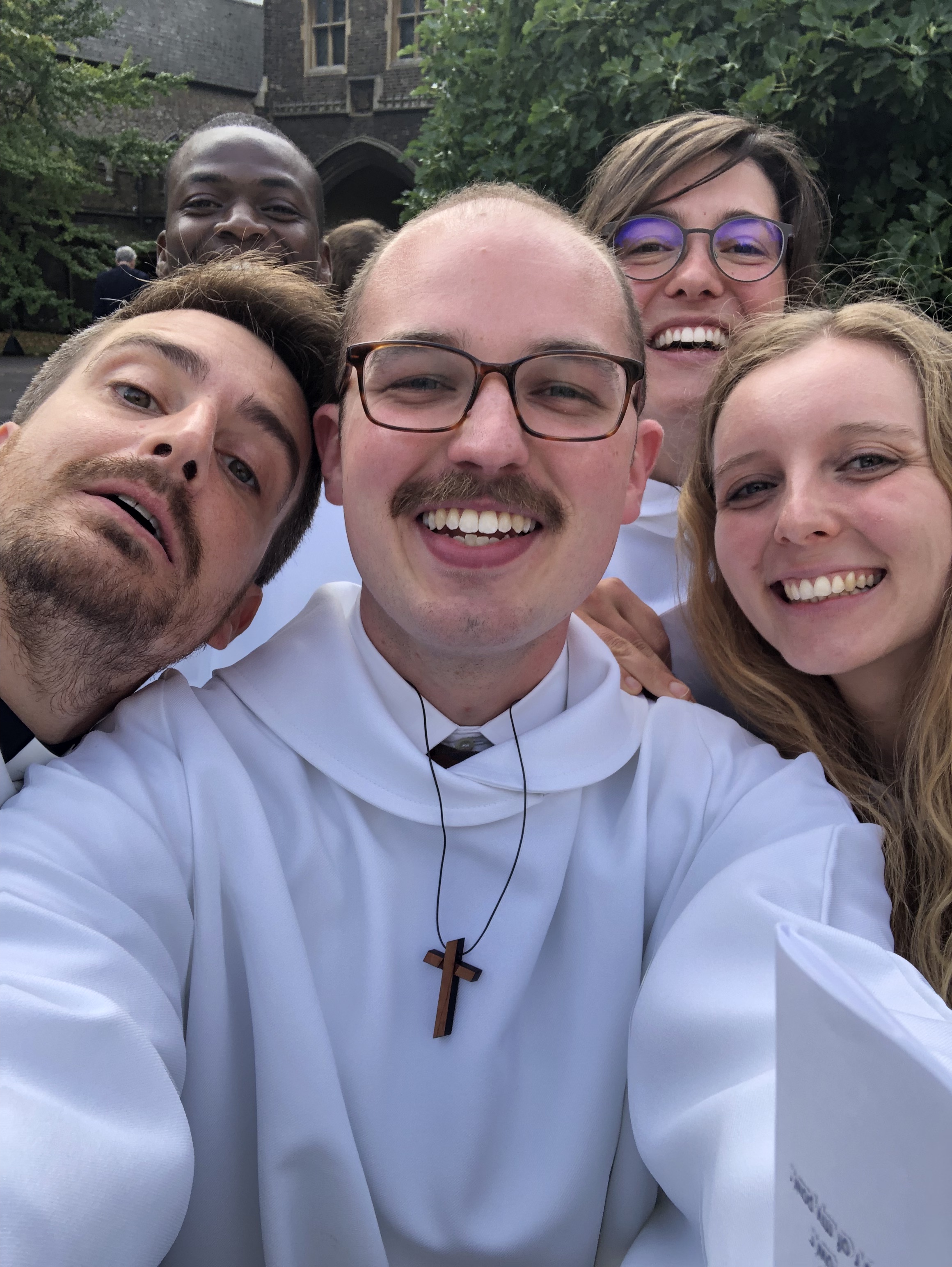
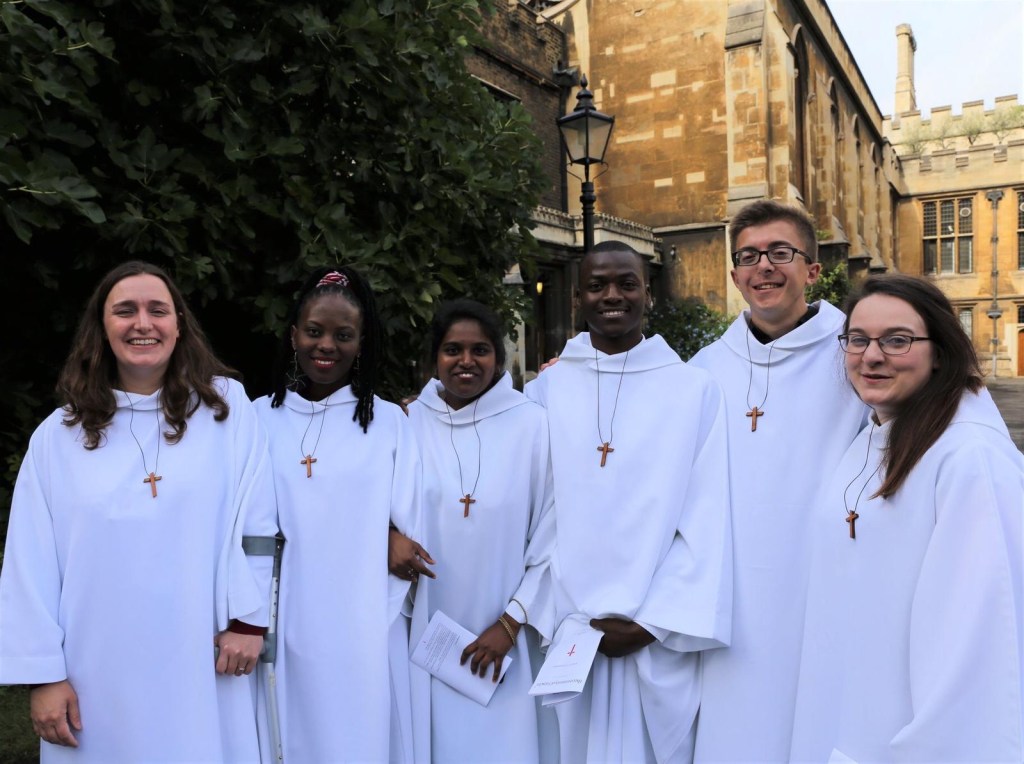
I invited two of my former students from the NIAHD program at William & Mary, both recently graduated from a boarding school in Oxford. They enjoyed standing in for my family, especially since that involved helping me wriggle into my alb for the first time. By that point in the service, the Archbishop had addressed us through a sermon on 1 Peter and choosing holiness, commissioned our Leaders, and called each of us by name. We responded “Here I am,” in our first languages. We committed, together, to “follow Christ, daily choose my fellow-members, and live according to the Rule… in God’s strength.” Then, dressed alike in our long, white robes, we circled the altar and the Archbishop placed crosses around our necks. We sang “Thuma Mina/Send me, Lord.” Finally, we followed him out — the Archbishop of Canterbury charges down an aisle, if you were wondering — and through the palace to the fig tree, where we always take our first official picture as a Community, surrounded by a living symbol of the hope for a unified church.
So, it seems, these are the visible and outward forms: a wooden cross and a long, white alb. A fig tree. Oil for healing. Prayers for unity. Or, perhaps, the twenty-four of us, together, are the outward sign of all that reaching. Reaching for the infinite and everlasting: God.
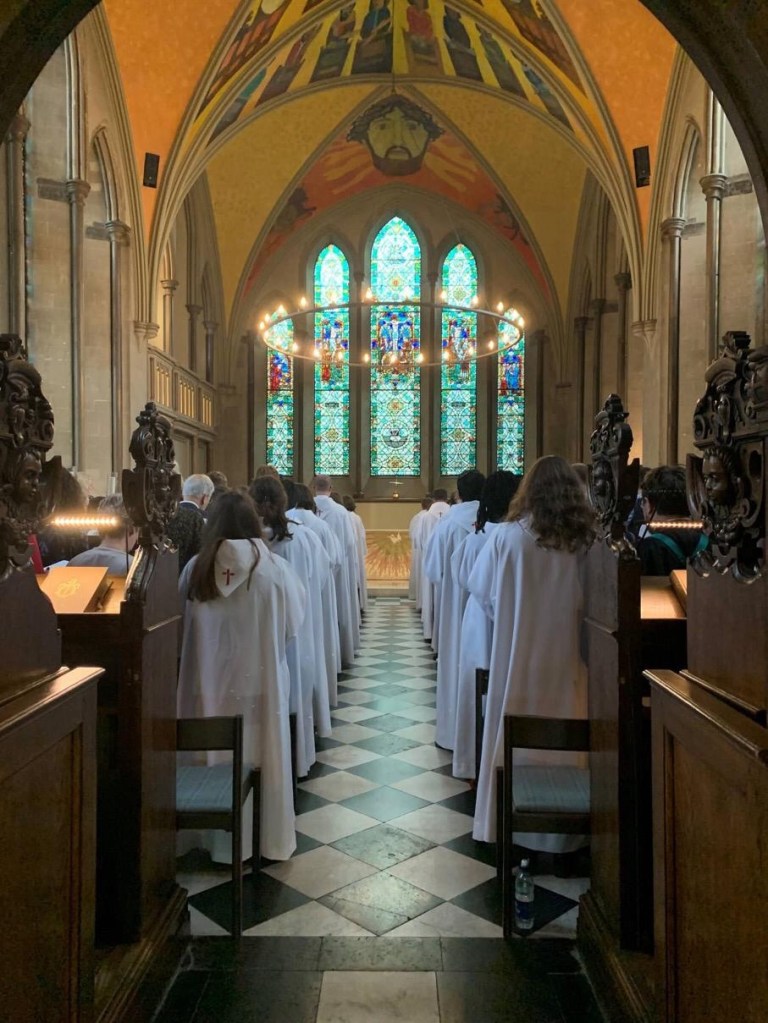
Living Symbols of Church Unity
 Franklin of Anselm: Updates from Living in God's Time