
The first week of November, Dr. Alison Gray, from Westminster College, Cambridge, taught us about the Psalms. An excellent and approachable instructor, Dr. Gray introduced us to the history, voices, and devotional application of the psalter.
She also described the three dominant types of psalms. Based on Walter Brueggemann’s classification of the psalms, Dr. Gray presented the psalms of praise as those of Orientation, lament as Disorientation, and thanksgiving as Reorientation.
- Psalms of praise/orientation generally follow this pattern:
- Introduction, with a call to praise
- Reasons for praise, including the nature or character of God and the actions of God
- Conclusion, with a renewed call for praise.
- Laments:
- Invocation, addressing or crying to God
- Complaint, which describes the circumstances of need
- Petition, pleading for help and staying why God should help
- Conclusion, expression of trust or confidence in God
- Thanksgiving:
- Introduction, stating intention to thank God
- Narrative, story of distress or crisis and deliverance
- Conclusion, vow of praise or testimony to God’s faithfulness
She encouraged us to put ourselves into the psalms, to put the psalms into our own context, and to pray with the psalms. With great sensitivity, she suggested we pray and sing the whole psalter, even the extreme, hyperbolic, and disturbing passages, because they freed us to express our deepest and loudest emotions, as long as it is done within the structure of a psalm, which almost always resolves, or the wider context of thanksgiving and praise. In other words, we can certainly lament, but we cannot stay that way, we have to be willing to let God move us along.
I enjoyed Dr. Gray’s often interactive lessons, especially the exercise in writing our own psalms. Collectively, we wrote twelve psalms in a way that I cannot wait to replicate in the future. First, we each wrote a call to praise, then we folded down that part of our paper and passed it to the next Community Member. They then wrote a statement about the nature of God, folded it and passed it; the next wrote something God does or did, passed it; and the last author wrote a concluding declaration of praise. Even though we could not see the preceding lines, our psalms were lovely, sometimes silly or quite stirring. We read them aloud, appreciating the lines that incorporated parallelism and creative imagery.
Before Dr. Gray returned to Cambridge, I collected and edited our psalms into the “psalter” below. I was amazed at the patterns that developed, at how lines and images that seemed completely unconnected became harmonious with just a little change in verb, orientation, or punctuation. The Christian psalms, in particular, that mention Christ or the Trinity, fell beautifully into place.
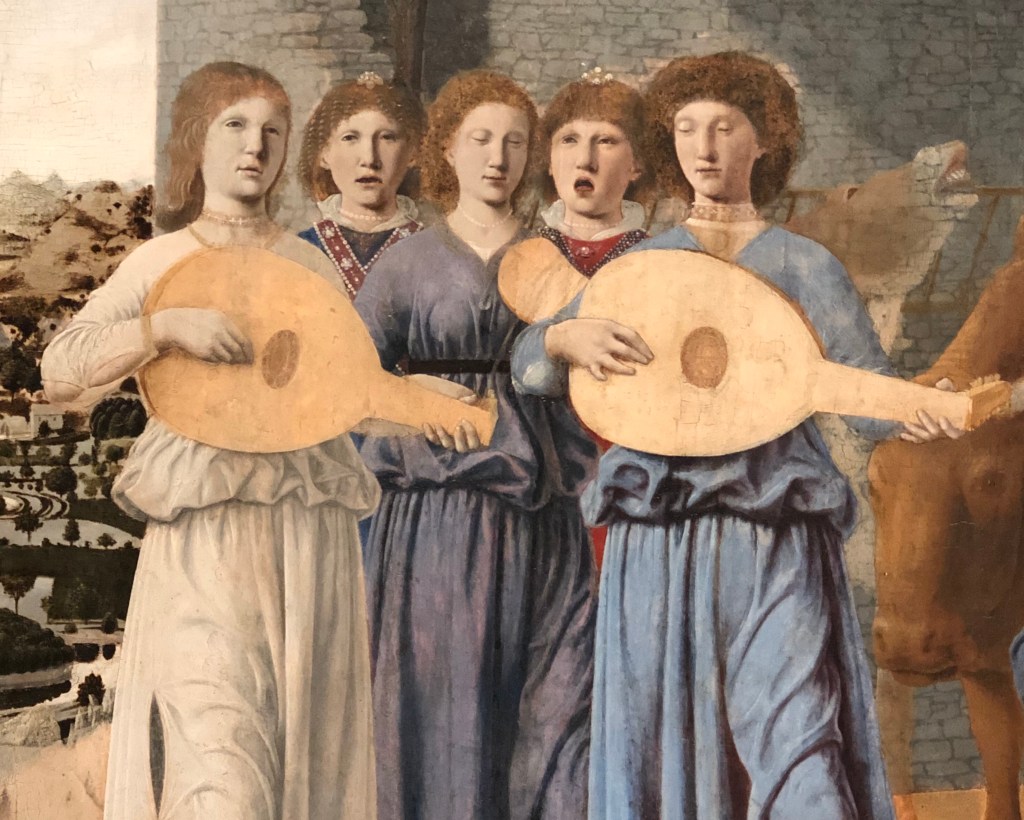
On Remembrance Sunday, the 10th, I visited St. Martin’s-in-the-fields twice, for their Remembrance mass and Patronal Feast (plus dinner and a quiz bowl!) Those services continued to inspire my exploration of the psalms, as did a solo visit to the National Gallery. The result of that Sunday is “Psalm of all things.”
Peace – JFL
Psalms from St. Anselm’s
members of the Community of St. Anselm
I.
O Almighty, You alone —
You feed my soul like a farmer
with a flock of cattle.
Hold me in your hands!
Let me follow you all the time.
Praise the Lord.
Rejoice in the Lord.
Praise the Lord.
Amen.
II.
Lord, we praise you for your kindness and love:
that which you feed into us has no depth
and is everlasting.
I call to you and then you respond to me.
Hallelujah!
I trust in You, O Lord;
You are my refuge.
III.
Let everything with breath in it praise the Lord!
For God is our strength when we are weak.
Your breath gives us life. Our bodies depend on your air.
When I was stuck between the rocks,
You came and saved me.
Praise you, O Lord.
IV.
Hallelujah! Praise the Lord.
Praise the creator and sustainer of the Earth.
Your goodness I see from dawn to dusk.
Lord Jesus, we thank you for your wonderful gift of life:
glory and honor is yours forever,
the seas and the oceans don’t do justice
to how deep your love is!
Glory to the most high!
All is well with my heart.
V.
Come to worship!
Come to worship the God of Gods,
for God is faithful and just.
His voice is gentle and full of grace.
The creativity and greatness of you,
your mercy and unfailing love,
shall follow me all the days of my life.
Amen.
VI.
A psalm of praise! Come all you families,
you children, parents and elders!
You are a kind and generous Shepherd.
You guide us with a gentle hand and loving gaze.
I rest in your ever-present grace.
We give you all praise and honour
forever and ever. Amen!
VII.
Come all you faithful,
Come to the house of the Lord!
The fountain of the Spirit is filling my garden.
I love it!
You comfort me with your sweet words,
your laws direct and guide my steps.
I rely always in your leadership.
I love it!
Nothing can move us from your never-ending peace.
Praise to the Lord, the almighty.
I love it!
VIII.
I will exclaim your goodness, Lord Jesus, who died for us,
who saved us from our sins.
As a duck tends her ducklings,
so you care, O Lord, for your children.
You are now ploughing your wisdom in my thoughts,
the harvest will come next year in autumn. Amen.
IX.
The Lord, my comforter, my healing, my hero.
I find refuge under Your mighty wing.
You are Creator, Christ, and Spirit,
present then and now and ever.
You have freed us from darkness
and led us into glorious light!
To the Alpha and Omega
shall I let my praises ring
forever and ever.
X.
Praise to the Lord, the Almighty, the king of creation,
who sits on His throne, mighty and righteous.
Crimson but pure, his garments tell his tale.
The Lord gives water and light,
good soil and care to all crops.
The Lord gives bread and wine, water and fish
to fill our tables and our bellies.
Praise God with everything you are!
May all that you do give glory to the Lord!
XI.
My Lord, in the emotional turmoil you bring to me,
You are yet the rock of my life.
You are my shepherd, indeed.
King of kings, in you I trust.
We are restless until we find rest in you.
You are our peace.
My heart is full of praise —
Who is like the Lord, my God?
XII.
O come, O come Emmanuel — Hallelujah! —
for you are good,
you are the source of life,
you are our loving creator,
who parted the seas for me to walk through
to get to Him.
We walk on waters — together — holding hands.
The Lord’s love be praised!
God’s care and good kindness be praised!
Amen and amen.
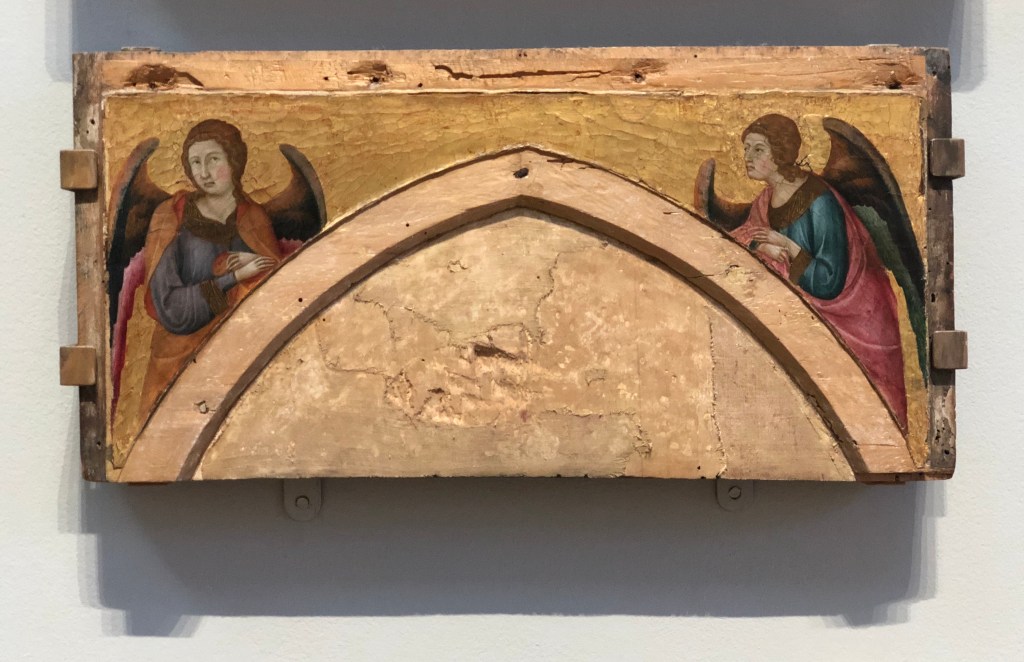
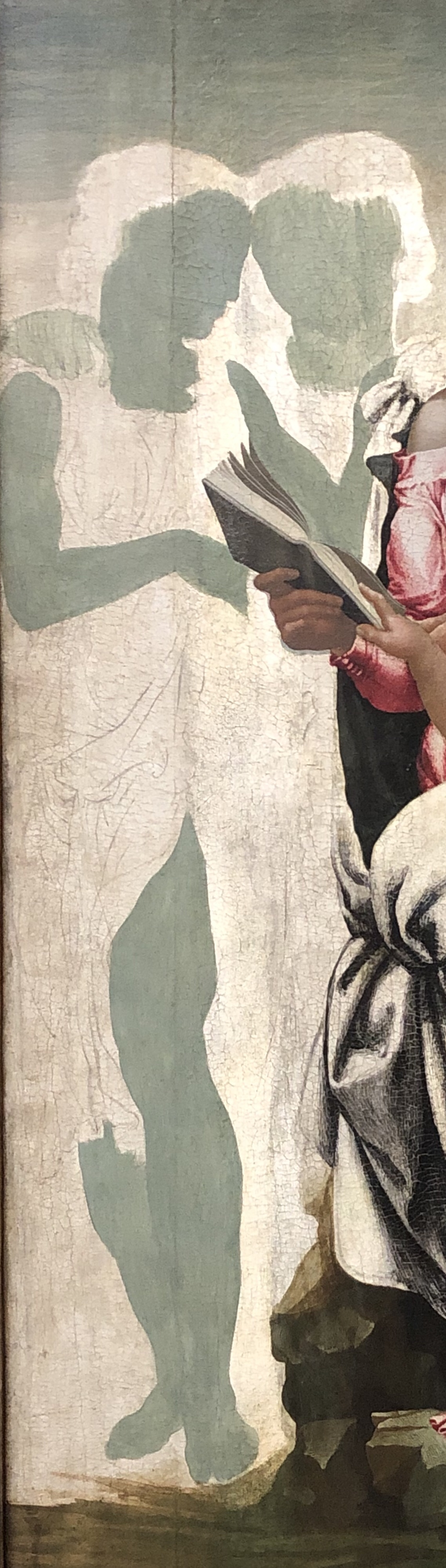
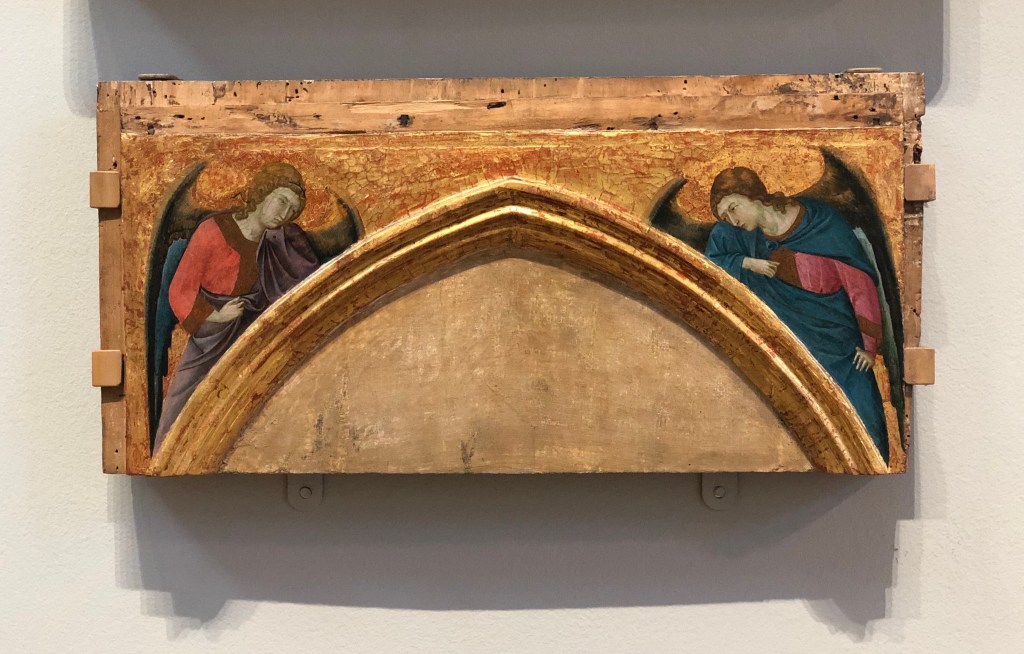
I consider this segment of Michelangelo’s The Entombment a companion piece to my psalm about God creating all that is seen and unseen. Nowadays, art historians are wary to describe any painting as “unfinished,” just as we might avoid claiming that God, who creates the seen and unseen, has left any work undone.
Psalm of All Things
from the Remembrance Mass and Patronal Feast at St. Martin’s-in-the-Fields,
J. Franklin Lowe
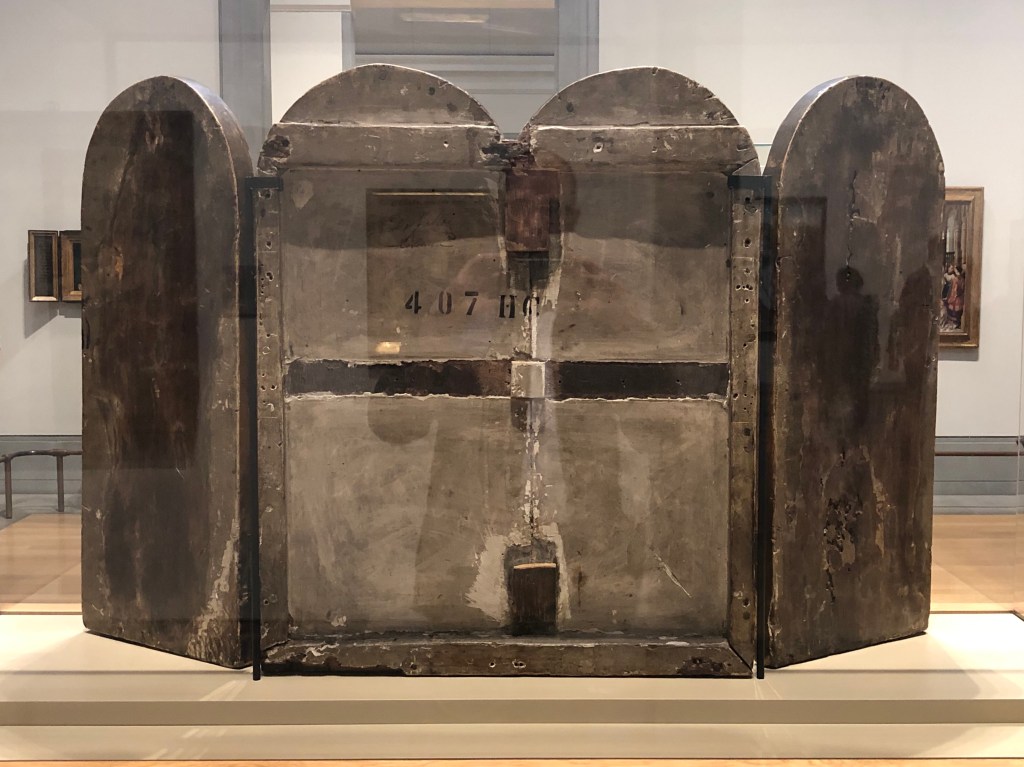
Praise to you, maker of heaven and earth,
creator of all that is, seen and unseen,
all that is heard, felt, sensed and taken in.
You gild the farthest reaches of my sight,
turn corners of impossibility into capitals and cherubim.
You join the singers, David-set, with perfect voice
and rustle with children in delight.
You act boldly, like an unexpected trumpet,
like a horn high over heads upturned to hear.
You enter our lives through the rend in the temple,
through the warm, red cloak quickly cut in two.
You enliven our hearts with the breaking of bread,
the taking, blessing, giving, and going in peace.
You offer us your broken heart, clear pane of your presence,
and bend our senses, time, space, and light, towards you.
Praise to you, God of the surviving and dead,
creator of all who are, seen and unseen,
of all remembered, all living your abundance.
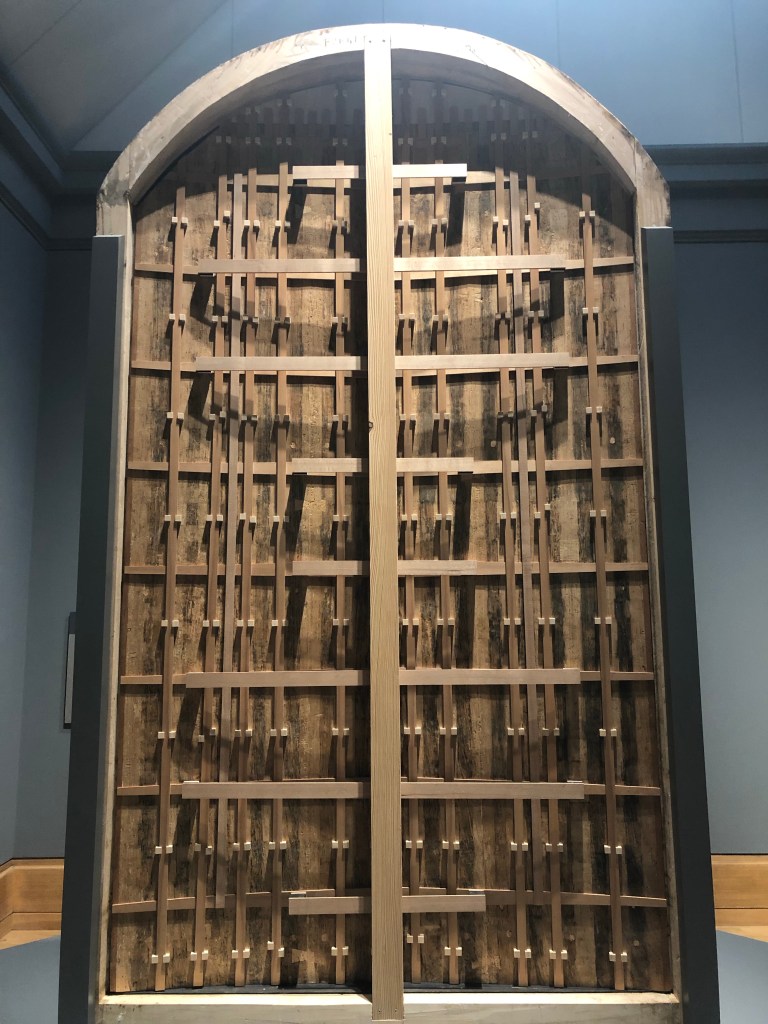
Result of a revolutionary conservation initiative at the National Gallery
 Franklin of Anselm: Updates from Living in God's Time